
Cornea
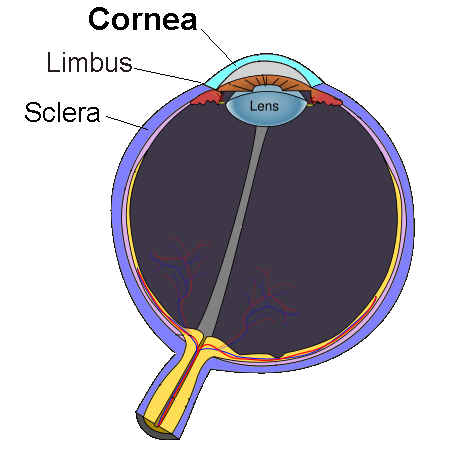
What is the Cornea?
Cornea is the transparent outermost layer of the human eye. Technically speaking, the cornea is not a single layer; it’s made of five delicate membranes that are arranged one below the other. Cornea plays a major role in focussing your vision; its transparency and its curvy shape helps in refracting light from an object in a way that it falls at the perfect spot on the retina thereby enabling sharpness of vision. In addition to this, the cornea also acts as a protective layer preventing all the dust, dirt and germs from entering into the inside of our eyes. Now, that’s quite an important role to play, ain’t it?
Location and Anatomy of the Cornea
The cornea is the transparent, dome-shaped outermost layer of the eye that covers the iris, pupil, and anterior chamber. It plays a vital role in refracting light to help the eye focus. Anatomically, the cornea consists of five layers:
- Epithelium – The outermost layer that protects the eye and absorbs oxygen and nutrients.
- Bowman’s Layer – A tough layer that provides structural support.
- Stroma – The thickest layer composed of collagen fibers for strength and flexibility.
- Descemet’s Membrane – A thin but strong inner layer that supports the endothelium.
- Endothelium – The innermost layer that maintains corneal transparency by controlling fluid levels.
Appointment Making System
Our Eye care professionals will help you determine the most convenient time and schedule an appointment that suits your needs.
Book An AppointmentDifferences Between Cornea and Retina
The cornea and retina serve distinct roles in vision:
- Location: The cornea is located at the front of the eye, while the retina is at the back.
- Function: The cornea focuses incoming light onto the retina, which then converts light into electrical signals for the brain.
- Structure: The cornea is a transparent, avascular layer, whereas the retina consists of multiple layers of light-sensitive cells and blood vessels.
- Role in Vision: The cornea provides initial focus, while the retina processes and transmits visual information to the brain.
Did You Know? Fascinating Facts About the Cornea
The cornea has no blood vessels within it. It gets all its nourishment from your tears and a fluid called the aqueous humor that’s filled behind the cornea.
Corneal Treatments and Procedures
Corneal Diseases require multi-modality of medications which help in reducing the symptoms and curing the disease. Also, these diseases take a very long duration of treatment and frequent follow-ups. The most important factor for early healing and recovery is patient’s compliance to use medications religiously as per the instructions. In cases of infections of cornea, small amounts of superficial corneal tissue is removed (scrapping) and evaluated for presence of type of infection and the organism causing it. Depending on the results, specific medications for that infection are given to help faster recovery.
- Pain
- Reduced Vision
- Inability to open eyes in bright light
- Redness
- Watering
- Swelling of the eyelid
Corneal Transplant
When the loss of corneal transparency is the cause of visual loss, corneal transplantation is the method of choice of treatment. When whole thickness of cornea is affected or damaged due to the corneal disease, a full thickness corneal transplantation is done. The damaged cornea of the patient is completely removed and a healthy cornea from a donor’s eye is transplanted.
However, with latest advances, we are able to identify injury restricted to the thinnest layers of the cornea. Remember, the entire cornea itself is only about half a millimeter in thickness.
We can now remove only the damaged layers of the cornea rather than the whole cornea & these treatments have revolutionized the practice of eye transplantation.
What are the Common Corneal Problems?
The corneal surface and its structure are very delicate. Any injury or infection of the cornea can lead to damage leading to loss of corneal transparency and thereby disrupting the normal vision. Common problems that affect the cornea include, corneal ulcers, keratitis (inflammation of the cornea) and keratoconus (thinning of the cornea) apart from the allergies, infections like herpes and the corneal abrasions caused by external injuries. Common symptoms produced are:
- Pain
- Reduced Vision
- Inability to open eyes in bright light
- Redness
- Watering
- Swelling of the eyelid
Frequently Asked Questions (FAQs) About Cornea
The cornea serves as the eye's outermost layer and plays a crucial role in focusing vision. It acts as a protective barrier against dust, germs, and harmful particles while also bending (refracting) light to help the eye focus on objects clearly.
The success rate of corneal transplants varies depending on the condition being treated and the overall health of the recipient. On average, the success rate is around 85-90% for low-risk cases, while it may be lower in complex cases involving underlying diseases.
The cornea is the transparent, dome-shaped front surface of the eye that focuses incoming light, while the retina is a light-sensitive layer located at the back of the eye that converts light into neural signals for vision processing by the brain.
The cornea is located at the front of the eye, covering the iris, pupil, and anterior chamber. It acts as the first refractive surface that helps direct light into the eye for clear vision.
Common symptoms of corneal problems include blurred or distorted vision, redness, pain, excessive tearing, sensitivity to light, and the sensation of a foreign object in the eye. In severe cases, it may lead to vision loss if untreated.